Fundación Amparo y Manuel
Skip to main content
  • Menu
  • THE COLLECTION
  • Exhibitions
  • Contact
  • About Us
  • ES
  • EN
Menu
  • ES
  • EN

Nacimiento. Miradas en el Tiempo (2025): Museo de Arte Precolombino e Indígena (MAPI) - Diciembre 2025 a Abril 2026. Montevideo, Uruguay

Próximas exposiciones exhibition
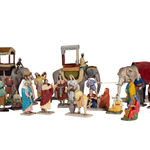
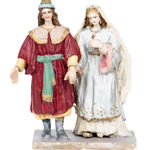
Open a larger version of the following image in a popup: Las bodas de Caná, S.XX
Open a larger version of the following image in a popup: Las bodas de Caná, S.XX La boda de Caná

Wedding in Cana, S.XX

New Testament
Juan 2, 1-7; 2, 11
© Felipe Nieva / Cortesía Fundación AMMA

Further images

  • (View a larger image of thumbnail 1 ) La visita de la reina de Saba, S.XX
  • (View a larger image of thumbnail 2 ) La visita de la reina de Saba, S.XX
  • (View a larger image of thumbnail 3 ) La visita de la reina de Saba, S.XX
  • (View a larger image of thumbnail 4 ) La visita de la reina de Saba, S.XX
  • (View a larger image of thumbnail 5 ) La visita de la reina de Saba, S.XX
  • (View a larger image of thumbnail 6 ) La visita de la reina de Saba, S.XX
  • (View a larger image of thumbnail 7 ) La visita de la reina de Saba, S.XX
  • (View a larger image of thumbnail 8 ) La visita de la reina de Saba, S.XX
  • (View a larger image of thumbnail 9 ) La visita de la reina de Saba, S.XX
  • (View a larger image of thumbnail 10 ) La visita de la reina de Saba, S.XX
  • (View a larger image of thumbnail 11 ) La visita de la reina de Saba, S.XX
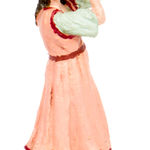
  • (View a larger image of thumbnail 12 ) La visita de la reina de Saba, S.XX
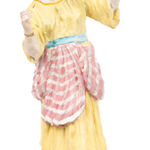
  • (View a larger image of thumbnail 13 ) La visita de la reina de Saba, S.XX
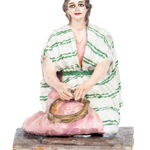
  • (View a larger image of thumbnail 14 ) La visita de la reina de Saba, S.XX
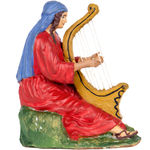
  • (View a larger image of thumbnail 15 ) La visita de la reina de Saba, S.XX
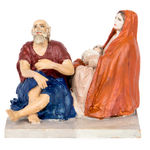
  • (View a larger image of thumbnail 16 ) La visita de la reina de Saba, S.XX
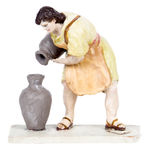
  • (View a larger image of thumbnail 17 ) La visita de la reina de Saba, S.XX

Read more

Three days later, there was a wedding in Cana of Galilee, and the mother of Jesus was there. Jesus was also invited to the wedding, along with his disciples. When the wine ran out, Jesus’ mother said to him: “They have no more wine.” Jesus replied: “Woman, what does this have to do with me? My hour has not yet come.” But his mother said to the servants: “Do whatever he tells you to do.” Now there were six stone jars standing there, used by the Jews for ceremonial washing, each holding about a hundred liters. Jesus said to the servants: “Fill the jars with water.” And they filled them to the brim. Then he said: “Now draw some out and take it to the master of the banquet.” They did so, and the master of the banquet tasted the water that had been turned into wine. He did not know where it had come from, though the servants who had drawn the water knew. [...] This miraculous sign was the first that Jesus performed at Cana in Galilee. In this way, he revealed his glory, and his disciples believed in him. (John 2,1–11)

The Gospel of John selects certain signs and fills them with symbolism to make evident to its readers the divinity of Jesus. The first sign or miracle that John recounts is the one in which Jesus and his mother, Mary, are invited to a wedding in Cana of Galilee. When the wine runs out, Mary tells Jesus, who at first seems to dismiss what has happened. Mary instructs the servants to do whatever Jesus tells them, and he miraculously turns several jars of water into high-quality wine. For John, the wedding feast and its abundance represent the coming of the Kingdom of God on earth, which Jesus inaugurates with his first miracle.

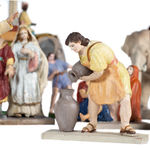
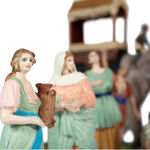
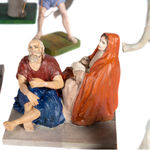
Nieva represents the scene with an atmosphere of great anticipation, it seems that the lively wedding celebration has paused for a moment to see what the miracle worker from Galilee will do. All eyes are fixed on him as he extends his arms, while a servant is filling a jar.


Previous
|
Next
24 
of  40
Back to exhibitions

¡Suscríbete a nuestro newsletter!

Send

* denotes required fields

I have read and accept the privacy policy of Fundación AMMA.

Av. Las Flores 64 A,

Campestre, Álvaro Obregón,

01040, Ciudad de México. 

info@amma.art


  • About Us
  • The Collection
  • Exhibitions
  • Contact us
Instagram, opens in a new tab.
Facebook, opens in a new tab.
Youtube, opens in a new tab.
Send an email
Privacy Policy
Administrar cookies
Copyright © 2025 AMMA
Site by Artlogic

This site uses cookies, if you continue on the site you accept their use. For more information, see our cookies policy.

Administrar cookies
Aceptar

Cookie preferences

Check the boxes for the cookie categories you allow our site to use

Cookie options
Required for the website to function and cannot be disabled.
Improve your experience on the website by storing choices you make about how it should function.
Allow us to collect anonymous usage data in order to improve the experience on our website.
Allow us to identify our visitors so that we can offer personalised, targeted marketing.
Save preferences