


Ahasuerus and Esther’s Palace, S.XX
Further images
-
(View a larger image of thumbnail 1
)
-
(View a larger image of thumbnail 2
)
-
(View a larger image of thumbnail 3
)

-
(View a larger image of thumbnail 4
)
-
(View a larger image of thumbnail 5
)
-
(View a larger image of thumbnail 6
)
-
(View a larger image of thumbnail 7
)
-
(View a larger image of thumbnail 8
)
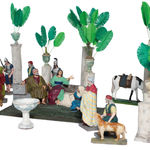
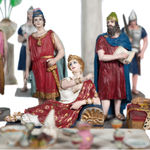
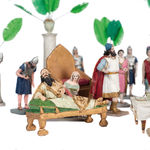
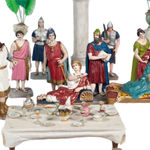
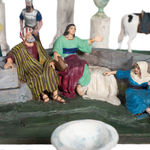
On the third day, when she had finished her prayers, Esther removed her penitential garments and clothed herself in royal attire. She was resplendent. Then, invoking the God and Savior who watches over all, she went forth with two maids, gently leaning on one with delicate grace, while the other followed carrying the train of her robe. Esther glowed, radiant in beauty, her face looked cheerful like that of a beloved one, yet her heart was filled with fear. She passed through all the doors until she stood before the king. He sat upon his royal throne, arrayed in all his majestic ornaments, with gold and precious stones. The king’s appearance was terrifying. Lifting his face, flushed with majesty, he gazed upon her in fierce anger. Queen Esther paled, staggered, and fainted, leaning on the shoulder of the maid [...] The king was troubled, and all the courtiers sought to revive her. [...] That day Haman went out in good spirits and with a cheerful heart; but when he saw Mordecai at the king’s gate, who neither rose nor trembled before him, he was filled with rage against Mordecai, though he restrained himself. (Esther D, 1-7; D,16; 5,9. USCCB version)
The Book of Esther tells the origin of the festival of Purim. In the form of a historical novel, it narrates the story of a Jewish orphan who was raised by her uncle Mordecai, an advisor to the kingdom. When he learned that the Persian emperor Ahasuerus (Xerxes) was looking for women for his harem, he dressed and perfumed Esther, hiding her Jewish origin. Esther was taken to Xerxes, who included her in his harem as a concubine. After some time, Esther became Xerxes’ favorite and the Queen. Esther found out that Haman, one of the king’s viziers, wanted to massacre her people, and she told her husband, confessing that she was Jewish. Xerxes ordered Haman and his ten sons to be hanged.
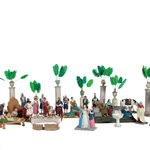
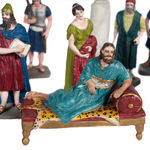
The scene represented comes from the Greek version of the text, which is more novelistic and puts a special emphasis on emotions, Esther is about to faint and is being helped by her maids while being in front of the king, around them the entire court is at a banquet, and Mordecai, along with other Jews, is outside the palace.